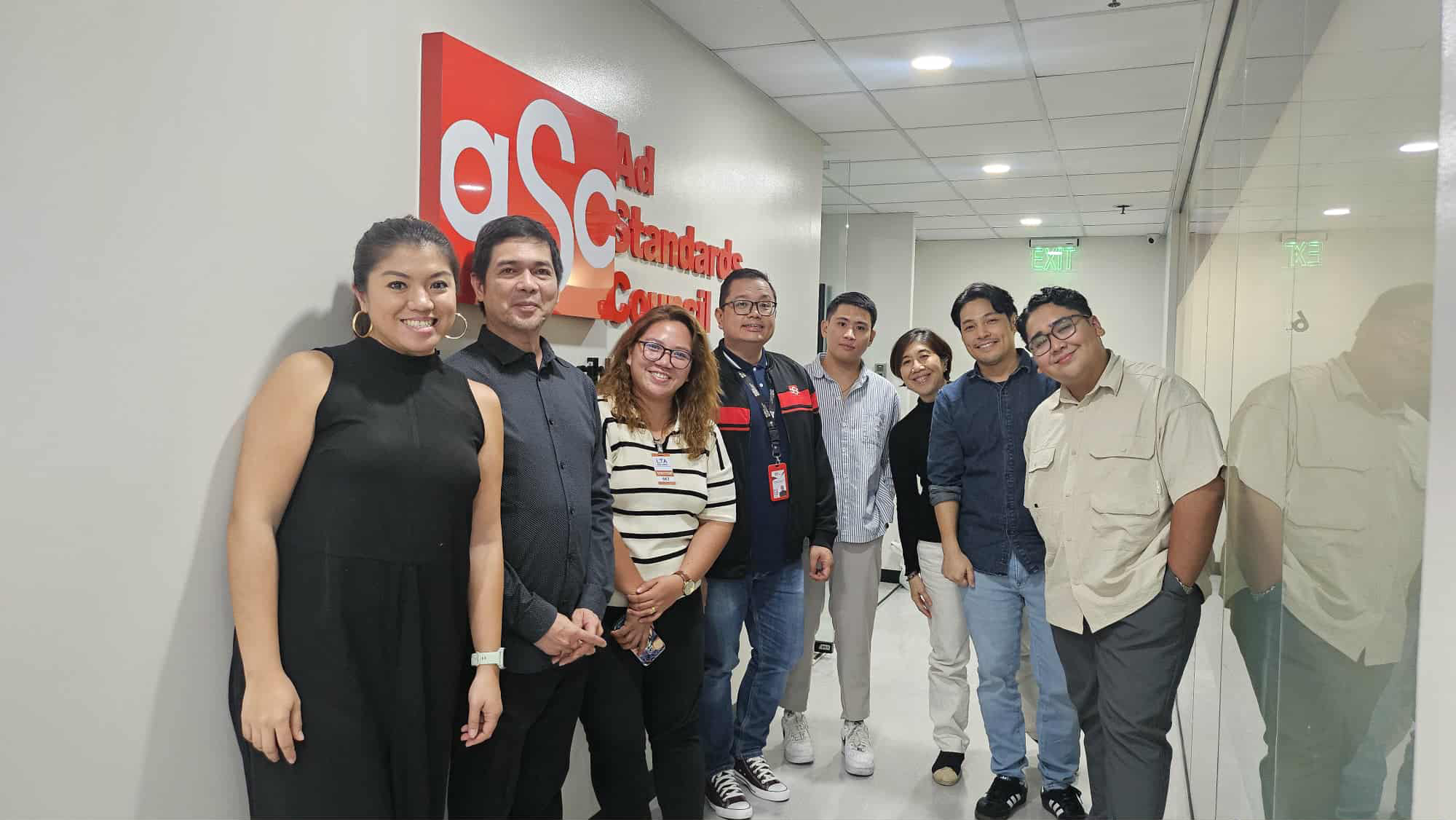
Roundtables with ASC
CICPRTASC-001
May 7, 2025
1. Are there clear guidelines that define what an Ad is in the age of new digital media?
TLDR;
Not everything needs to be screened by the Ad Standards Council. But if they fall under the Five Mandatory Categories and the Five Must-Screen Claims, then they have to be screened.
- The Five Mandatory Categories:
- Over-the-counter drugs or home remedies
- Food supplements
- Alcohol beverages
- Milk under the milk code
- Transport promos or fare promos
- The Five Must-Screen Claims:
- Number one or leadership claim
- Absolute claim
- Comparative claim
- Exclusivity claim
- Superiority claim
- If the ad contains themes of violence or sex, sexiness, and/or nudity
- If the ad will be featured in a must-screen medium such as broadcast or out-of-home
2. Do unpaid recommendations fall under ASC jurisdiction?
TLDR;
If they are not part of the five must-screen categories and five must-screen claims, then they do not need to be cleared. If the post is not commissioned by the brand, then there is currently no requirement to clear it.
Full Answer
For examples such as restaurants, hotels, food, and similar reviews, if these do not fall under any of the five must-screen categories and do not include any of the five must-screen claims, then there is no need to screen them with the ASC. If the creator was not engaged by the brand, then the brand has no responsibility over that review. In the context of self-regulation, communication materials should still uphold honesty, truthfulness, accuracy, decency, and responsibility so that posts and reviews are not deceptive or misleading.
3. Do boosted posts need ASC clearance?
Answer
No. The determiner is not whether a post is boosted, but whether it falls within the Five Must-Screen Categories and the Five Must-Screen Claims.
4. How can unpaid reviews and paid collaborations be distinguished?
Answer
Ads remain the responsibility of the brand owner. If there is a concern, the ASC will contact the brand owner. If a complaint involves a content creator, the creator may also be contacted, not to put them on the hot seat, but to inform them of the complaint and invite them to reconsider the post. The creator may choose to keep the post up or take it down. If there is no relationship between the brand and the creator or influencer, then it is outside the jurisdiction of the ASC. If a relationship is established, the ASC may look deeper into that relationship.
For CICP Consideration: Suggestion from the roundtable to create an IF-THEN infographic for creators on what needs to be cleared by the ASC.
5. Can regulation stay flexible for creative execution?
Answer
Claims still need to be truthful and accurate. At the end of the day, content should not be misleading or inaccurate. If a claim is truthful, it must also be supported or substantiated. In advertising, as long as it does not disparage and it is truthful, then it is allowed. The goal is not to clip the wings of creativity.
6. What about batch applications and large campaigns?
TLDR;
ASC is working on an alternative for large campaigns. This will be discussed within the Technical Working Committee of the ASC and the Board. Once approved, it is expected to be announced within May 2025 for application to digital creator campaigns.
7. Is storyboarding still required for digital creator campaigns?
Answer
If it is a live application, meaning a live video regardless of platform, then there is no problem because only a live script is needed. If the 1-to-many application is approved by the Technical Working Committee of the ASC, then storyboarding would benefit from that same category and the new requirement could serve as the alternative. For now, however, the status quo remains: storyboarding is still required.
8. Do live campaign activations over 1 to 4 days qualify for special handling?
Answer
Yes. In cases such as trendjacking or immediate campaign activation, these may fall under a Special Application, allowing a single S1 application with a same-day decision.
9. How are Instagram Stories and 24-hour posts treated?
Answer
This is still being studied by the ASC.