Category: Uncategorized

  • CICP GMM: Building a Safer Digital Space Against Scam and Online Gambling

    FOR IMMEDIATE RELEASE

    22 August 2025

    CICP GMM: Building a Safer Digital Space Against Scam and Online Gambling

    Makati City, Philippines — August 22, 2025 — The Creator and Influencer Council of the Philippines (CICP) convened its General Membership Meeting focused on building a safer digital space against scams and online gambling. The discussion reinforced the Council’s commitment to ethical content creation, responsible digital engagement, and stronger collaboration among creators, brands, platforms, and stakeholders.

    The session highlighted the growing risks posed by scam-related content and unlawful online gambling promotions across digital channels. As these threats become more visible and accessible, CICP emphasized the need for clear standards, public awareness, and industry-wide accountability to help protect audiences, especially younger and more vulnerable communities.

    CICP underscored that creators and influencers play an important role in shaping online behavior and public trust. The Council encouraged members to exercise due diligence in evaluating partnerships, avoid campaigns connected to unlawful or harmful activities, and uphold content practices that are safe, legal, and socially responsible.

    During the meeting, members also discussed the broader responsibility of the creator economy in supporting a digital environment grounded in integrity, transparency, and public welfare. The conversation reflected CICP’s ongoing efforts to professionalize the industry while promoting standards that protect both creators and audiences.

    As a council representing the interests of creators and influencers, we believe it is our duty to help set standards that prioritize safety, legality, and ethical responsibility in the digital space.

    CICP calls on creators, brands, and platforms to work together in fostering a safer and more responsible online ecosystem. Through advocacy, education, and collaboration, the Council remains committed to advancing a creator industry built on trust, accountability, and innovation.

    About CICP

    The Creator and Influencer Council of the Philippines (CICP) is a non-profit organization dedicated to empowering creators, influencers, brands, and stakeholders in building a sustainable, responsible, and professional digital content industry. Through advocacy, education, and collaboration, CICP works to elevate industry standards and foster an ecosystem built on trust, responsibility, and innovation.

  • CICP Holds First-Ever Regional General Membership Meeting and Creators Forum in Cebu

    Cebu City, Philippines – Marking a significant milestone in its nationwide engagement efforts, the Creator and Influencer Council of the Philippines (CICP) held its first-ever Regional General Membership Meeting (GMM) on July 17, 2025, at the newly reopened Puso Village in Cebu City. The event was a bold step forward in the Council’s mission to decentralize the creator economy and empower regional voices in the digital and creative industries.

    With the theme “Connecting Brands and Creators for Community Growth,” the event convened over 80 attendees—from creators and brand leaders to agency partners and educators—for an immersive evening of cultural experience, strategic dialogue, and collaborative exchange.

    The GMM served as the first formal gathering at the new Puso Village, a cultural landmark inspired by hawker-style community spaces, which celebrates Cebuano identity through food, art, and performance. CICP was honored to be the venue’s first institutional guest, symbolizing the alignment between community heritage and the evolving influence economy.

    Elevating Regional Voices in the Creator Economy

    Opening with a live weaving demonstration, tribal performances, and a ceremonial welcome, the event grounded participants in Cebu’s vibrant cultural roots. This set the tone for CICP’s leadership presentations, which included a reflection on the Council’s 2025 accomplishments and a preview of strategic plans focused on broadening reach and impact across the regions.

    CICP Vice President for Internals, Mich de Guzman, officially welcomed the guests and highlighted the significance of the first regional GMM, underscoring the Council’s intent to sustain presence and programs beyond Metro Manila. In closing remarks, CICP President Jel Directo echoed the importance of regional inclusion and invited stakeholders to co-create a more equitable and thriving creator ecosystem.

    Meaningful Conversations Between Creators, Brands, and Agencies

    The forum’s main program featured two anchor sessions. A panel discussion moderated by Inka Magnaye brought together brand and agency leaders to explore “Building Authentic Brand Partnerships.” Panelists included:

    • Dhia Carole Hilario – Nestlé Philippines
    • Lui Castañeda – Unilever Beauty & Wellbeing
    • Bryan Yap – CEO of Republiq Group and CICP Regional Committee Director

    The conversation covered key themes such as creator-brand alignment, cultural relevance, trust building, and long-term collaboration in the regional context.

    Following this, a fireside chat with Cebu-based creators Issa Perez-Gandionco and Doc Xavier provided firsthand insights on what it takes to grow as a regional content creator, maintain authenticity, and engage meaningfully with both community and brand partners. Their reflections affirmed that VisMin creators are not only culturally resonant but also strategically positioned to lead in localized storytelling and influence.

    A Stronger Creator Ecosystem, From the Ground Up

    Beyond the discussions, the event also offered facilitated networking and a dinner showcasing Cebuano cuisine—creating space for deeper connection among creators, marketers, and collaborators. With immersive programming and high engagement from attendees, the forum proved that meaningful industry-building can thrive outside traditional creative hubs.

    As CICP closes 2025, this first regional GMM affirms the Council’s commitment to inclusive growth, regional empowerment, and professional development for all Filipino creators—wherever they are in the country.

    About CICP

    The Creator and Influencer Council of the Philippines (CICP) is the country’s leading industry organization for digital content creators, influencers, and brand partners. It works to professionalize the creator economy, foster ethical standards, and champion sustainable collaboration among creators, brands, agencies, and platforms nationwide.

  • CICP Sets Standards for Creators Amid Rise of Illegal Online Gambling Ads

    FOR IMMEDIATE RELEASE

    22 August 2025

    CICP Sets Standards for Creators Amid Rise of Illegal Online Gambling Ads

    Makati City, Philippines — August 22, 2025 — The Creator and Influencer Council of the Philippines (CICP) has released its official stance regarding the involvement of creators and influencers in promoting illegal online gambling. This move underscores CICP’s ongoing commitment to uphold ethical practices, safeguard creators, and protect the public from the harmful effects of unlawful digital activities.

    In recent months, there has been growing concern over the rise of gambling-related content and advertising across both digital and physical platforms. From visible outdoor ads along major thoroughfares to the ease of accessing online gambling through common payment channels, these developments have heightened the risks of exposure, particularly among younger and more vulnerable audiences. With creators and influencers increasingly tapped to amplify such promotions, the CICP recognizes the urgent need to set clear guidance for the industry.

    Statement/Position

    The CICP does not condone the use of creators and influencers to promote illegal online gambling in any form.

    Rationale

    • The CICP advises creators and influencers to avoid promoting illegal online gambling as it poses significant risks of public harm, including exploitation of individuals and communities.
    • The CICP does not engage in, endorse, or participate in any marketing or promotional activity that involves unlawful activities, including illegal online gambling activities, operators, platforms, or websites.
    • The CICP encourages creators to collaborate only with brands and campaigns that comply with all applicable laws and uphold responsible content practices.

    This position reflects CICP’s responsibility not only to its members but also to the wider public, ensuring that creators uphold integrity in their work and align with industry best practices. It also supports ongoing government actions to curb the spread of illegal gambling, including the removal of unauthorized advertisements and restrictions on access to gambling platforms through local e-wallet services.

    “As a council representing the interests of creators and influencers, we believe it is our duty to set clear standards that prioritize safety, legality, and ethical responsibility,” said Jel Directo, President of the Creator and Influencer Council of the Philippines. “By taking a firm stance against illegal online gambling promotions, we aim to protect both creators and audiences from the harmful effects of these unlawful activities.”

    CICP calls on creators, brands, and platforms to uphold these standards and work together in fostering a safe and responsible digital content environment.

    About CICP

    The Creator and Influencer Council of the Philippines (CICP) is a non-profit organization dedicated to empowering creators, influencers, brands, and stakeholders in building a sustainable, responsible, and professional digital content industry. Through advocacy, education, and collaboration, CICP works to elevate industry standards and foster an ecosystem built on trust, responsibility, and innovation.

    Media Contact

    Inka Magnaye
    Public Relations Officer, CICP
    hello.cicp@gmail.com

  • CICP Regional Creators Forum: Connecting Brands and Creators for Community Growth

    Date: July 17, 2025
    Time: 5:00 PM
    Venue: Puso Village, F. Gonzales corner Quezon Blvd., near the Carbon Bagsakan entrance

    The Creator and Influencer Council of the Philippines (CICP) proudly invites regional creators, brands, and community leaders to the first-ever Regional Creators Forum, an evening of insight, storytelling, and connection built around the unique power of regional influence.

    As the creator economy grows beyond metropolitan centers, this forum puts a spotlight on VisMin creators — their voices, challenges, and massive potential to shape authentic brand narratives and community growth.

    This event also marks a milestone for CICP as it hosts its first regional General Membership Meeting (GMM), setting the tone for greater inclusivity, visibility, and investment in creators across the country.

    What to Expect

    • Opening Remarks & Community Welcome
    • Fireside Conversations with Brand Leaders & Regional Creators
    • Panel Discussions on Authentic Partnerships and Regional Influence
    • Interactive Dialogue and Q&A
    • Networking, Dinner, and Open Conversations

    Speakers include representatives from leading brands like Nestlé Foods and Unilever Beauty and Wellbeing, agency leaders, and rising creators from across Visayas and Mindanao.

    We’ll explore what makes regional creators distinct, how they can build long-term brand relationships, and how together we can shape a more equitable, creator-first industry.

    Why Join?

    • Be part of CICP’s first regional convening
    • Learn directly from brands and creators leading the way in authentic partnerships
    • Connect with fellow creators and potential collaborators
    • Help shape the future of regional influence

    RSVP Now!

    Contact us at hello@cicp.com.ph for any queries!

  • CICP 2025: The Creator Compass

    February 4, 2025

    Photos from the event:

    CICP: TikTok’s Commitment to Safe and Secure Elections in the Philippines

    As part of its ongoing responsibility to foster a safe and informed digital space, TikTok has rolled out comprehensive programs to support election integrity, digital literacy, and community safety. In partnership with Philippine institutions such as COMELEC, NAMFREL, and LENTE, TikTok has taken a strong stand to protect the democratic process—removing harmful misinformation, preventing political manipulation, and equipping the public with tools for media literacy. Below is a full summary of TikTok’s initiatives and guiding principles in ensuring the safety of its platform, especially as the 2025 Philippine Midterm Elections approach:

    On Elections Integrity

    • We protect the integrity of elections by removing misinformation about civic and electoral processes, banning political ads, and taking action against content and accounts that spread hate or incite violence.
      • Misinformation: We do not allow misinformation about civic and electoral processes, regardless of intent. Our 21 global fact-checking partners help review and assess the accuracy of content across more than 50 languages.
        • Learn more about how we combat misinformation here.
        • Learn more about our fact-checking program here.
      • Covert Influence Operations: We are highly vigilant against actors who seek to use deceptive behaviors to try to affect civic processes and work diligently to identify and remove covert influence operations, which we report quarterly.
        • Learn more about how we do that here.
      • AI: We don’t allow manipulated content that could be misleading, including AI-generated content (AIGC) of public figures if it depicts them endorsing a political view. We require creators to label any realistic AIGC and launched a first-of-its-kind tool to help people do this. We continue to improve our policies and detection as the technology evolves while partnering with experts on media literacy content for our community.
        • Learn more about how we do that at the bottom section here.
      • Hate: We do not allow violent and hateful organizations or individuals on our platform, and prohibit incitement to violence, hateful behavior, hate speech, and hateful ideologies.
    • We empower our community by working with COMELEC, NAMFREL, and LENTE to provide access to authoritative information through our in-app Philippine Election Center, by conducting sessions with experts from civil society organizations and election watchdogs, and by launching #ThinkTwice, our digital literacy campaign.
    • As we learn more, we do more, which is why we continually look for ways in which we can help maintain the integrity of elections through stronger policies and enforcement strategies.
    • Learn more about our Election Integrity Work: Protecting the Integrity of the 2025 Philippine Midterm Elections
    • Learn more about our partnership with the Philippine Commission on Elections (COMELEC): TikTok Launches In-app Center to protect platform during elections and keep its Philippine community safe

    On Digital Literacy

    • We launched our #ThinkTwice Digital Literacy Campaign to encourage our Filipino community to think critically about the content they’re creating and sharing, to educate on our Community Guidelines, and to remind them that they can play their part in keeping the community safe and positive by reporting content to us through our easy-to-use in-app reporting feature.
    • Join the cause by posting your own videos encouraging your followers to #ThinkTwice. Tag us at @tiktokphilippines and use the hashtag #ThinkTwicePH.

    On Safety

    • At TikTok, we encourage our users to have the freedom and the opportunity to express themselves authentically and creatively in a safe and positive environment.
    • We welcome the respectful expression of different viewpoints, and want to ensure that anyone can share their voice without the fear of being degraded or bullied.
    • More than 40,000 people globally work alongside innovative technology to keep our platform safe and welcoming.
    • While we are a global company, we take a localized approach to content moderation and regulatory compliance, gaining a greater understanding of local dialects, contents and concerns through partnerships with local stakeholders.
    • Content creator Mona Magno Veluz sits as the Philippine member of our Safety Advisory Council. She brings a unique perspective as a Creator member of the Safety Advisory Council because of her rich experience in the social impact field, coupled with her passion and candidness when it comes to online safety.
    • In the Philippines, from July to September 2024, we removed over 4.5 million videos for violating our Community Guidelines, 99.7% of which were proactively removed and 98% of which were removed within 24 hours.
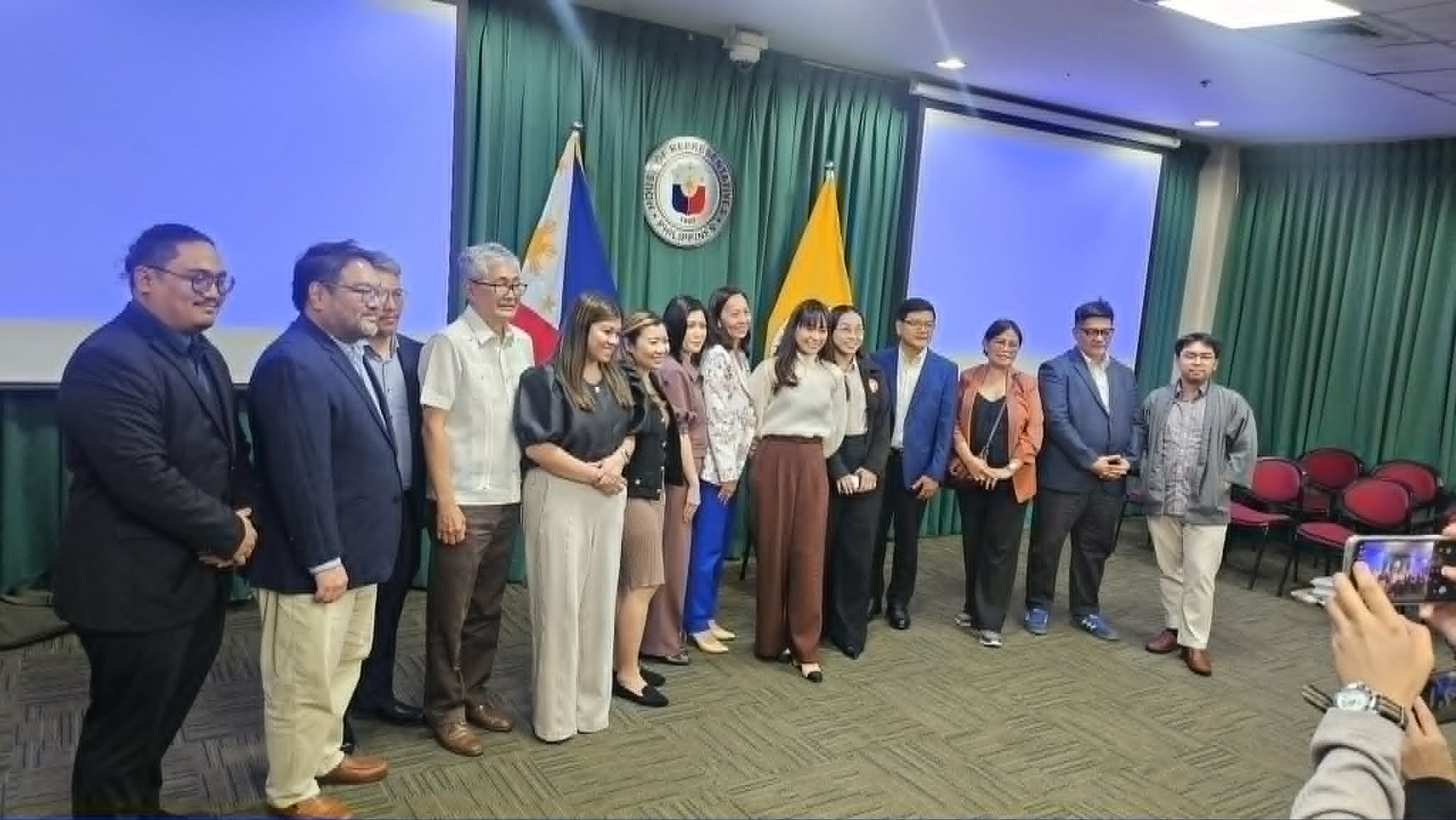
  • Key Points Raised During the Technical Working Group Discussion on the Proposed Anti-Disinformation Legislation

    Key Points Raised During the Technical Working Group Discussion on the Proposed Anti-Disinformation Legislation

    Key Points Raised During the Technical Working Group Discussion on the Proposed Anti-Disinformation Legislation

    1. Influence Cannot Be Measured by Follower Count Alone

    A proposal was raised to hold influencers above a certain follower threshold accountable for the spread of false information.

    I clarified that follower count is no longer the sole driver of influence. Due to algorithms, boosted content, recommendation systems, reposting behavior, and platform distribution, even accounts with relatively small followings can achieve significant reach and virality. In today’s digital environment, visibility is often driven by engagement and platform amplification rather than audience size alone.

    As such, concerns were raised that relying solely on follower thresholds may not accurately capture the true sources of influence and misinformation.


    2. Takedown Should Be Accompanied by Correction

    I noted that content removal alone may not sufficiently address the impact of misinformation.

    Once users have consumed a piece of false information, simply deleting the content does not necessarily inform them that what they saw was inaccurate. I suggested that platforms explore correction notices, contextual alerts, or user notifications to ensure audiences are made aware when previously viewed content has been found to be false or misleading.

    The objective should not only be the removal of misinformation but also the correction of public understanding.


    3. Faster Response Times Are Critical

    Concerns were raised regarding lengthy content review and takedown timelines.

    False information can spread within hours and potentially create real-world consequences before intervention occurs. Recent incidents demonstrate how rapidly information can circulate online during unfolding events.

    While immediate fact-checking of all content may not be realistic, it was suggested that platforms explore mechanisms to identify coordinated disinformation activity, including copy-paste campaigns and troll-farm behavior, to enable faster intervention and reduce the potential impact of viral falsehoods.


    4. Future-Proofing the Bill Through Broader Definitions

    A discussion emerged on whether the legislation should refer specifically to ‘social media’ or adopt broader terminology such as ‘digital media.’

    I noted that the distinction between creator, publisher, and media company continues to blur. As an example, Erwan Heussaff began as an individual creator through The Fat Kid Inside and has since built FEATR into a digital media platform producing multiple content properties and shows.

    Given the pace of industry evolution, concerns were raised that overly narrow definitions may become outdated over time and may fail to capture emerging forms of digital influence and content distribution.


    5. The Scope Should Extend Beyond Traditional Social Media

    I pointed out that misinformation is not confined to traditional social networking platforms.

    Platforms such as Reddit may not rely on follower-based systems but still facilitate the spread of information, speculation, rumors, and unverified claims. At the same time, these platforms can also provide legitimate spaces for anonymous discussion, whistleblowing, and the sharing of sensitive experiences.

    As a result, concerns were raised that limiting the legislation solely to traditional social media platforms may leave significant gaps in coverage across the broader digital ecosystem.


    6. The Role of Algorithms in Amplification

    When asked whether misinformation could spread without paid boosting, I explained that recommendation algorithms play a significant role in content visibility.

    Algorithms are trained not only by likes, comments, and shares but also by user behavior, including watch time, retention, and engagement patterns. Even brief pauses on content can signal interest to the platform and influence future recommendations.

    This helps explain how misinformation can spread organically through algorithmic amplification, even in the absence of paid promotion. It also highlights the importance of understanding how digital platforms shape information consumption and reinforce user behavior.


    7. Safeguards Against Abuse Must Be Considered

    Concerns were raised regarding the potential misuse of content takedown powers.

    Examples were cited of periods in which criticism of government was allegedly suppressed, highlighting the importance of ensuring that any future enforcement mechanisms cannot be weaponized against legitimate criticism, dissent, or free expression.

    I agreed that this concern is valid and emphasized that any legislation addressing misinformation must include strong safeguards, accountability measures, and due process protections to prevent abuse by future administrations or bad actors.


    8. Accountability Should Focus on Organizers of Disinformation Campaigns

    The proposed penalties included imprisonment of up to six years.

    Concerns were raised that severe penalties may disproportionately affect individuals operating at the lowest levels of coordinated disinformation networks. While those who knowingly and intentionally spread harmful falsehoods should be held accountable, it was suggested that enforcement efforts focus primarily on the organizers, financiers, operators, and architects of large-scale disinformation campaigns.

    The discussion emphasized the importance of ensuring that penalties are proportionate and directed toward those who design, fund, and coordinate disinformation efforts rather than solely those who may be acting under instruction or financial necessity.

    Overall Observation

    The discussion highlighted the growing complexity of addressing misinformation in an evolving digital landscape. Key themes included the limitations of follower-based definitions of influence, the role of algorithms in amplifying content, the need for broader and future-proof terminology, the importance of balancing enforcement with free expression, and the challenge of ensuring accountability reaches the true architects of coordinated disinformation campaigns.

    The overall direction of the discussion underscored the need for legislation that is effective, technologically informed, adaptable to future developments, and mindful of both public safety and democratic freedoms.
  • CICP Flash Survey: Filipino Creators Demand Lifestyle Downgrades and Consequences for Corrupt Officials at #TrillionPesoMarch

    CICP Flash Survey: Filipino Creators Demand Lifestyle Downgrades and Consequences for Corrupt Officials at #TrillionPesoMarch

    Manila, Philippines — September 21, 2025

    The Creator and Influencer Council of the Philippines (CICP) has released the results of a flash survey conducted in real time during the #TrillionPesoMarch. The survey gave creators the chance to voice their stance on corruption at the same moment Filipinos nationwide marched for accountability.

    Key Findings

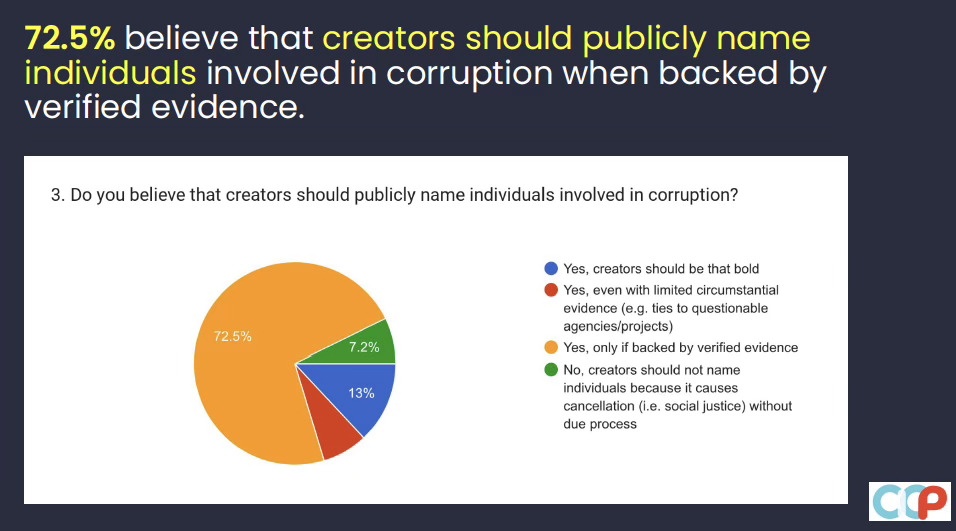
    • Naming Names: 72.5% of creators say they should publicly call out corrupt individuals — provided there is verified evidence.
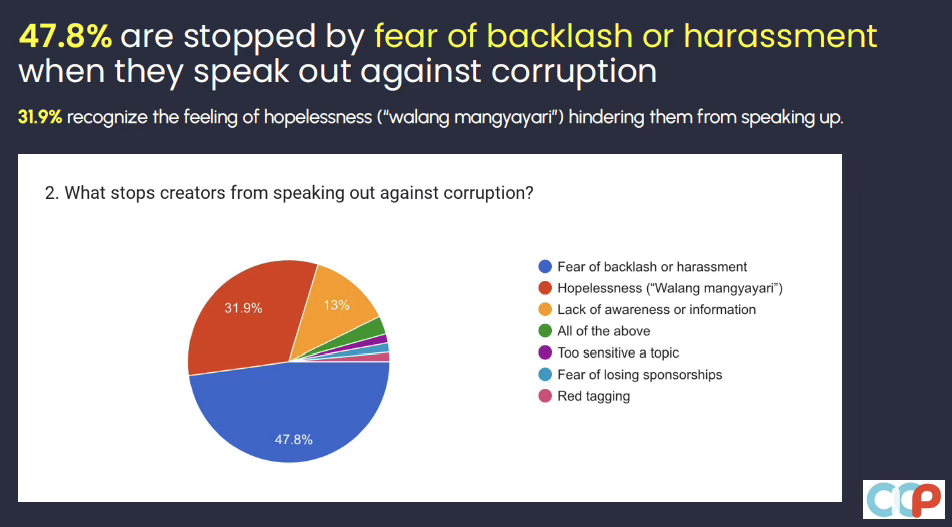
    • Barriers to Action: Nearly half (47.8%) hesitate due to fear of backlash, while 31.9% feel hindered by hopelessness — the belief that “walang mangyayari”.
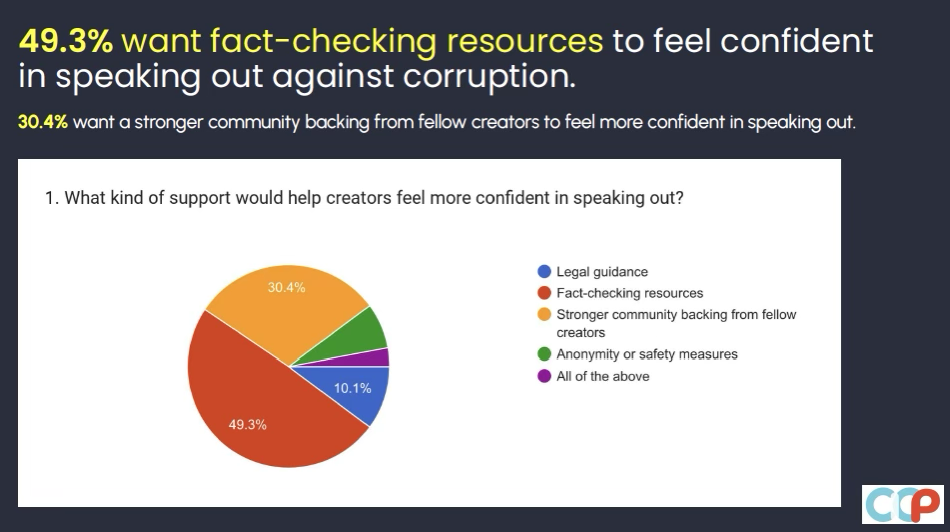
    • What Creators Need: 49.3% want access to fact-checking resources; 30.4% seek stronger backing from their fellow creators.
    • Who Should Be Audited Next: Beyond DPWH, creators pointed to the Office of the Vice President first, followed by the Bureau of Customs, PhilHealth, Department of Education, Department of Agriculture, and Sangguniang Kabataan.
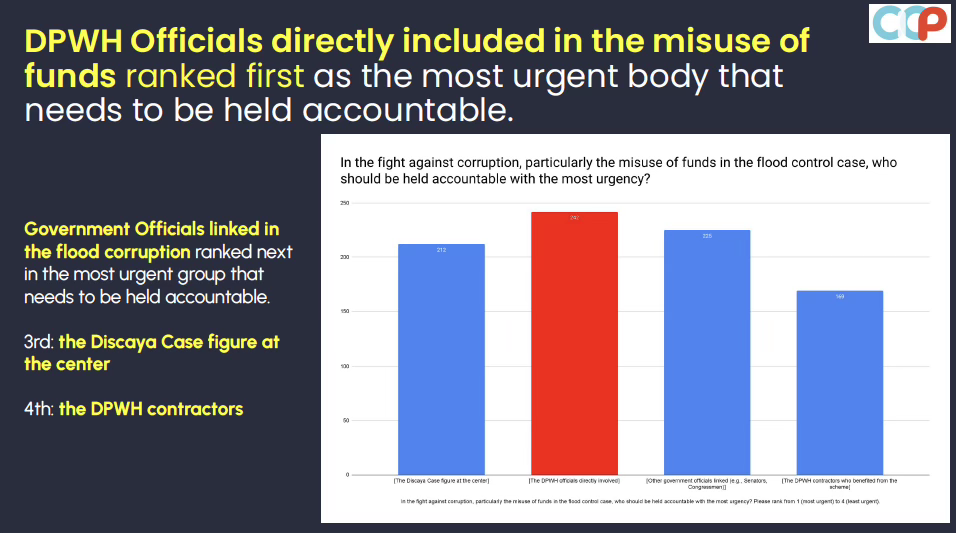
    • Flood Control Case: DPWH officials directly involved were ranked as the most urgent to be held accountable, followed by linked government officials, the Discaya case figure, and lastly, contractors.
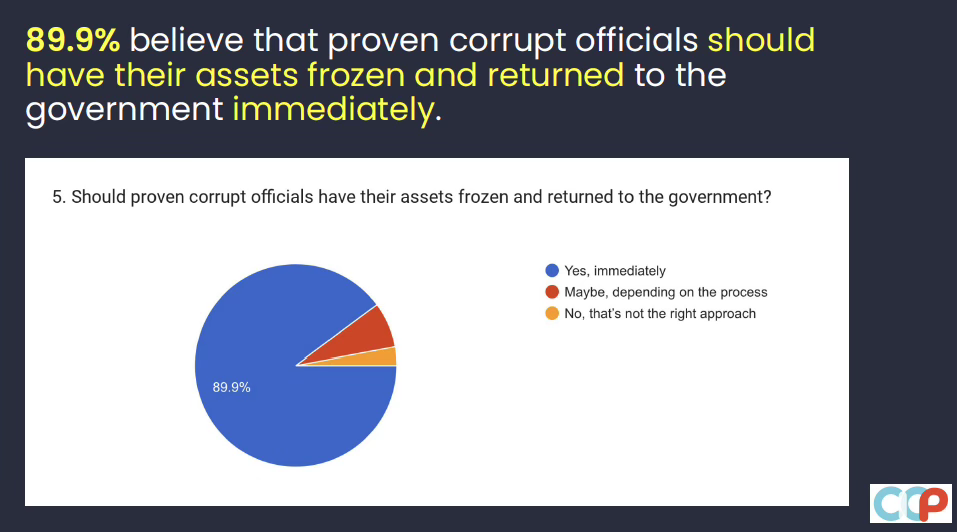
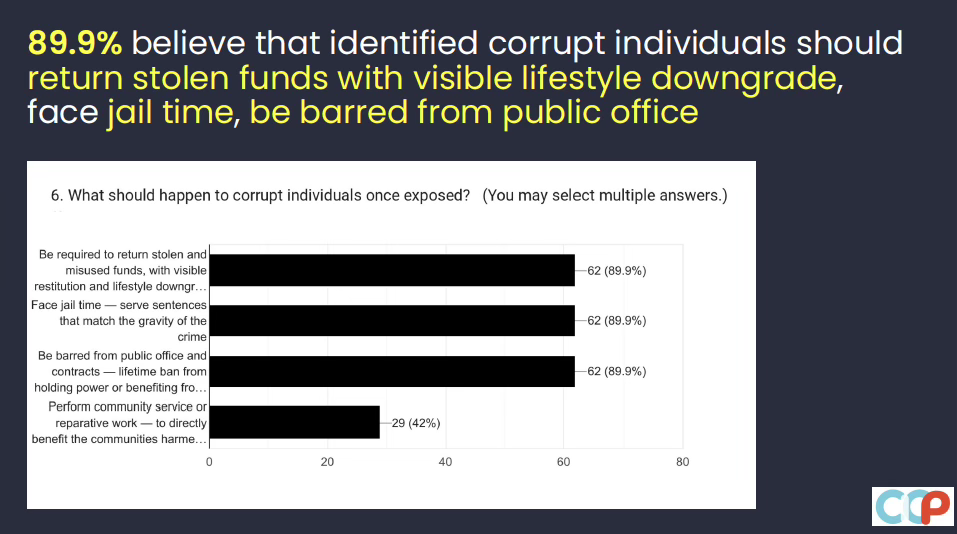
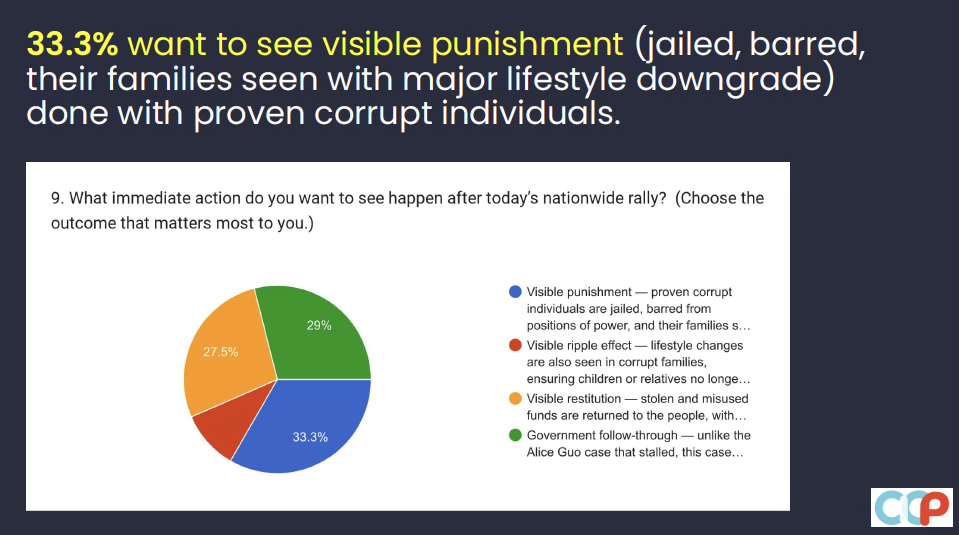
    • Visible Consequences: 89.9% demand that proven corrupt officials have their assets frozen, funds returned, jail time served, and be barred from office. Many emphasized the importance of a visible “lifestyle downgrade” to show ill-gotten wealth has been stripped away.
    • Family, Spouses, and Nepo Babies: Half of creators (50.7%) believe relatives of corrupt individuals — such as spouses and so-called “nepo babies” — should also be held accountable, while 47.8% believe they should only if they knowingly participate and benefit.
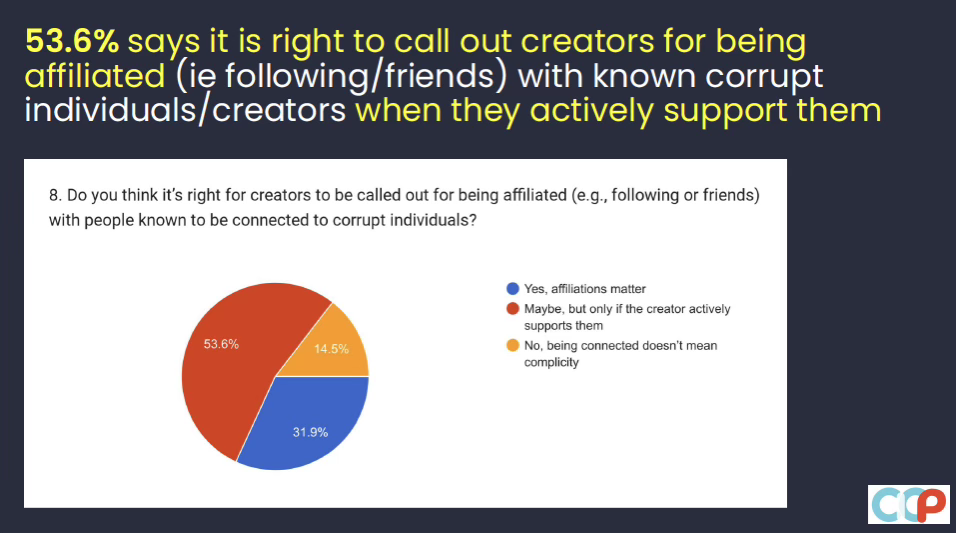
    • Affiliations: 53.6% believe creators who openly support corrupt figures — and creators directly related to corrupt figures — should be called out.

    Voices from the Creator Community

    “We don’t need to be resilient if we’re given the country we deserve. Today showed the strength of the people in this country and they deserve the love they give it.”

    @vincevelasco23

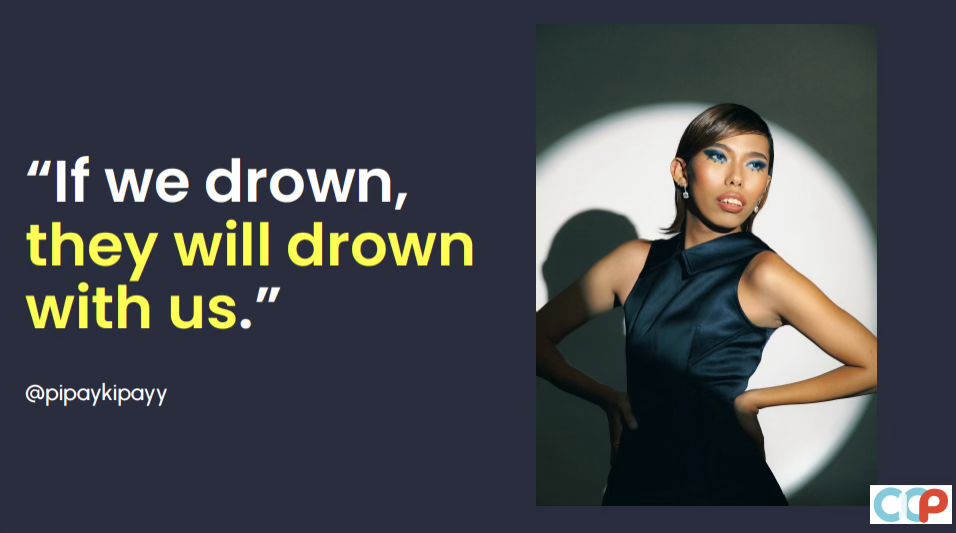
    “For so long we’ve been made to believe that corruption is normal, but it should never be. It’s time we demand better — for ourselves and for the generations after us.”

    @pipaykipayy

    “We’ve been using our platforms to influence our audiences with the products, brands, or causes that we believe in. It’s high time that creators should also use their platform to raise awareness and encourage fellow content creators to speak out on the most pressing issues our country continues to face.”

    @renzmchl

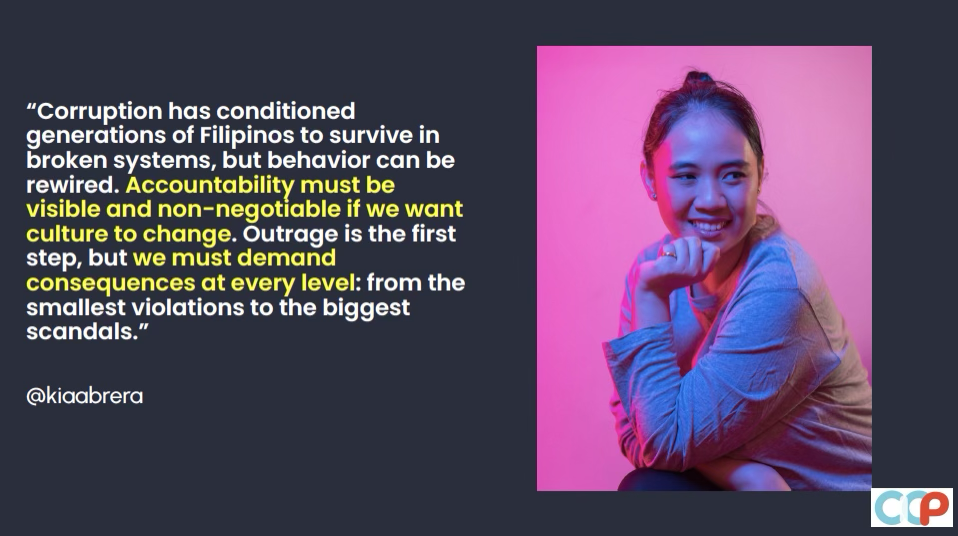
    “Corruption has conditioned generations of Filipinos to survive in broken systems, but behavior can be rewired. Accountability must be visible and non-negotiable if we want culture to change. Outrage is the first step, but we must demand consequences at every level: from the smallest violations to the biggest scandals.”

    @kiaabrera

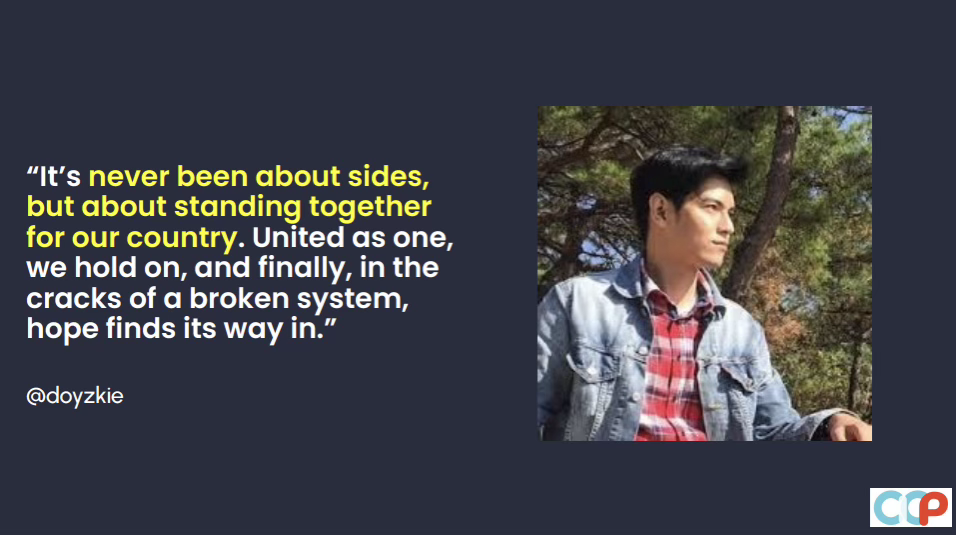
    “It’s never been about sides, but about standing together for our country. United as one, we hold on, and finally, in the cracks of a broken system, hope finds its way in.”

    @doyzkie

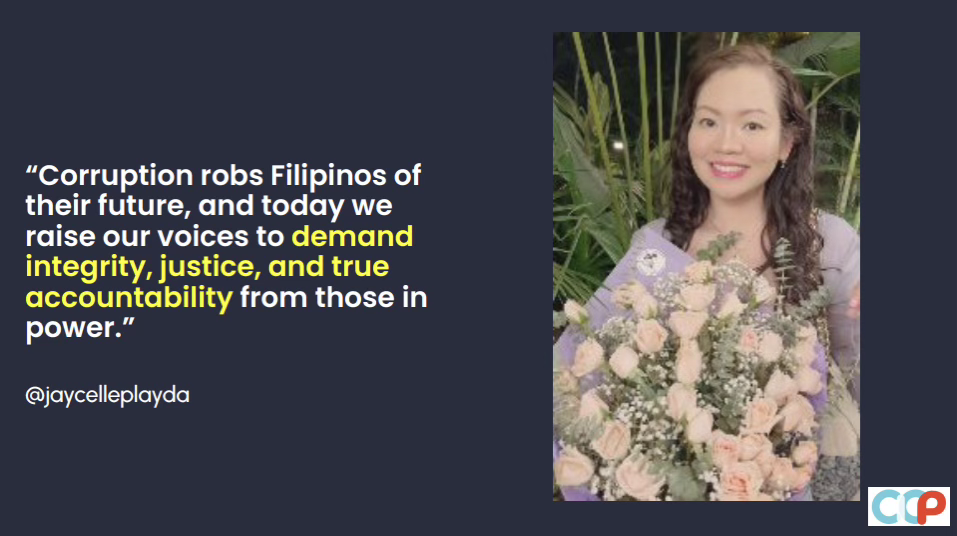
    “Corruption robs Filipinos of their future, and today we raise our voices to demand integrity, justice, and true accountability from those in power.”

    @jaycelleplayda

    Methodology

    The flash survey consisted of 10 questions answered within a 10-hour window, conducted simultaneously with the #TrillionPesoMarch. This format was designed to capture the immediate sentiments and convictions of creators while the rally unfolded nationwide.

    A Unified Call for Accountability

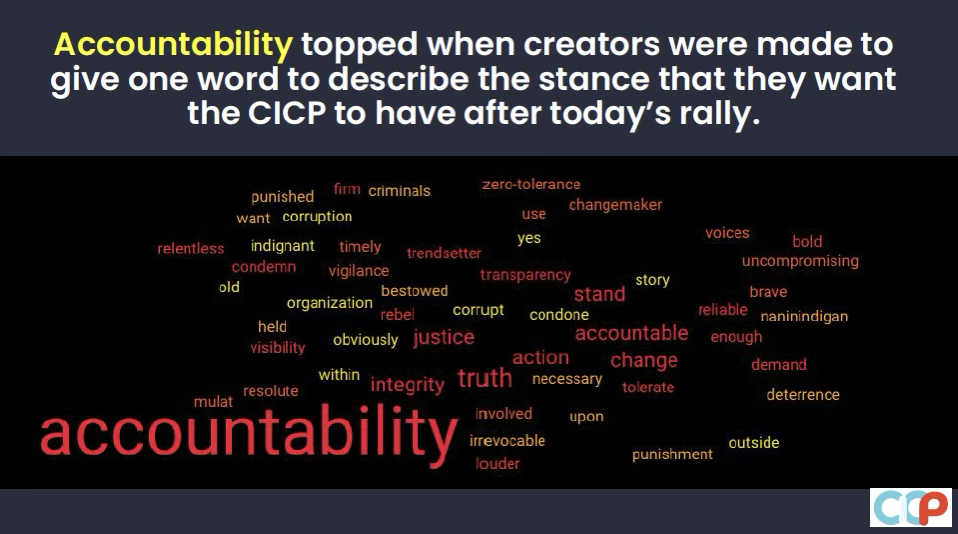
    When asked to summarize the stance they want CICP to take after the march, the most resounding word from creators was: Accountability.

    Media Contact

    Creator and Influencer Council of the Philippines (CICP)
    Email: hello.cicp@gmail.com | Website: www.cicp.ph

    Survey result graphic showing 49.3% want fact-checking resources and 30.4% want stronger community backing.
    Survey result graphic about barriers to speaking out against corruption, highlighting fear of backlash and hopelessness.
    Survey result graphic showing 72.5% support publicly naming corrupt individuals when backed by verified evidence.
    Survey result graphic ranking government agencies creators want audited, with the Office of the Vice President first.
    Survey result graphic about who should be held most accountable in the flood control case.
    Survey result graphic showing 89.9% support freezing and returning assets of proven corrupt officials.
    Survey result graphic about consequences for corrupt individuals, including returning funds, jail time, and bans from office.
    Survey result graphic about accountability for relatives or close connections of corrupt individuals.
    Survey result graphic about whether creators should be called out for affiliations with corrupt individuals.
    Survey result graphic about desired immediate action after the rally, including visible punishment and restitution.
    Word cloud graphic showing accountability as the top word creators want CICP to embody after the rally.
    Quote graphic featuring @vincevelasco23 about the country Filipinos deserve.
    Quote graphic featuring @pipaykipayy saying, If we drown, they will drown with us.
    Quote graphic featuring @renzmchl about creators using their platforms to raise awareness.
    Quote graphic featuring @kiaabrera about visible accountability and consequences.
    Quote graphic featuring @doyzkie about standing together for the country.
    Quote graphic featuring @jaycelleplayda about demanding integrity, justice, and accountability.
  • Why Ethical Influence Matters in the Philippine Creator Economy

    Building Trust Online

    The Creator and Influencer Council of the Philippines (CICP) exists to help shape a creator economy built on trust, accountability, and meaningful collaboration. As creators, brands, agencies, and platforms continue to influence public behavior at scale, ethical standards are no longer optional. They are essential to sustaining audience confidence and long-term industry growth.

    In the Philippines, digital communities are highly engaged, relationship-driven, and quick to recognize authenticity. This creates a major opportunity for responsible creators and partners to lead by example. It also raises the need for shared principles that support transparent partnerships, honest communication, and respectful audience engagement.

    What CICP Stands For

    CICP brings together key stakeholders across the industry to promote responsible content creation, influencer education, and constructive dialogue. As a nonprofit association, it serves as a platform for advocacy, collaboration, and professional development for those shaping the future of digital influence in the country.

    • Champion ethical standards in creator and influencer marketing
    • Support education and training for creators and industry partners
    • Encourage collaboration among brands, agencies, platforms, and communities
    • Advance policy conversations and public trust in digital engagement

    Why This Matters Now

    The creator economy is growing quickly, but growth without standards can weaken credibility. Audiences expect transparency. Brands expect professionalism. Regulators and industry leaders expect accountability. Organizations like CICP help bridge these expectations by creating space for dialogue, guidance, and shared responsibility.

    Responsible influence is not just good practice. It is the foundation of a stronger and more credible creator ecosystem.

    How Stakeholders Benefit

    For creators, a strong ethical framework supports credibility, career growth, and stronger brand relationships. For brands and agencies, it improves campaign quality and reduces reputational risk. For the broader public, it helps create a healthier digital environment where influence is exercised with care and responsibility.

    • Creators gain clearer standards and stronger professional support
    • Brands and agencies build more trustworthy partnerships
    • Platforms and communities benefit from more responsible engagement
    • The public gains confidence in the integrity of digital content

    Looking Ahead

    As the leading organization shaping the future of responsible content creation in the Philippines, CICP is committed to helping the industry move forward with purpose. Through education, advocacy, events, and stakeholder collaboration, the organization aims to strengthen both the practice and perception of ethical influence.

    Whether you are a creator, brand leader, agency professional, or platform representative, the future of the creator economy depends on the standards we build together. CICP invites stakeholders to take part in that mission and help shape a more trusted digital landscape for everyone.